Interactive Mind Maps
for Medical Learning
- Visual frameworks that mirror clinical thinking
- Explore connected concepts, not isolated facts
- Built for MBBS, USMLE, PLAB, FCPS & MRCP
What Are Interactive Mind Maps
Interactive Mind Maps in MediLearn.ai transform complex medical topics into visual, connected frameworks that mirror how doctors think.
Instead of studying topics in isolation, you explore:
- Relationships between concepts
- Clinical pathways
- Cause-and-effect connections
This helps you see the bigger picture, not just memorize fragments.
HOW TO USE MIND MAPS
How It Works
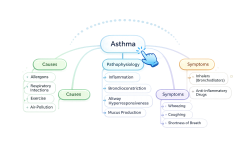
Each mind map is built as a dynamic, clickable structure

Central concept
Start with core topic (e.g., Heart Failure)

Branches
Main categories {Causes, Pathophysiology, Symptoms, Treatment}

Sub-branches
Detailed breakdowns of each category

Click any node
- View summaries
- Jump to MCQs or flashcards
Key Features of MediLearn.ai's Mind Maps
Expandable Concept Trees
Start with a core topic and explore deeper layers as needed. Learn at your own pace, from overview to detail.
Clinical Pathway Mapping
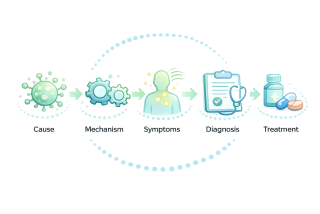
Visualize how conditions progress
- Cause → Mechanism → Symptoms → Diagnosis → Treatment
Smart Navigation
- Zoom in/out
- Collapse/expand branches
- Jump between related topics
No more scrolling through long notes

Why are mind maps the best way to learn
MediLearn.ai's mind maps are built on proven cognitive principles
Dual Coding Theory
Combining visuals + text improves understanding and recall.
You don't just read, you see the concept
Associative Learning
The brain remembers better when information is connected.
Mind maps mimic how memory naturally works
Active Engagement
Clicking, exploring, and navigating increases retention.
Passive reading →
Active learning

Frequently Asked Questions
Get tips to study smart straight to your inbox.
Subscribe to our newsletter and get weekly questions that can help you grow and learn.